Why Does a Cast Iron Skillet Need Seasoning?
A cast iron skillet isn’t like your regular non-stick pan. It’s made from raw iron, which means it can rust easily and cause food to stick if left untreated.
That’s where seasoning comes in. Seasoning is the process of coating the skillet with oil and heating it until the oil bonds to the surface, creating a natural non-stick layer. This layer protects the metal, enhances flavor, and makes cleanup easier.
In short — seasoning turns your skillet from just metal into magic.
Can I Use Soap on My Cast Iron Skillet Before Seasoning?
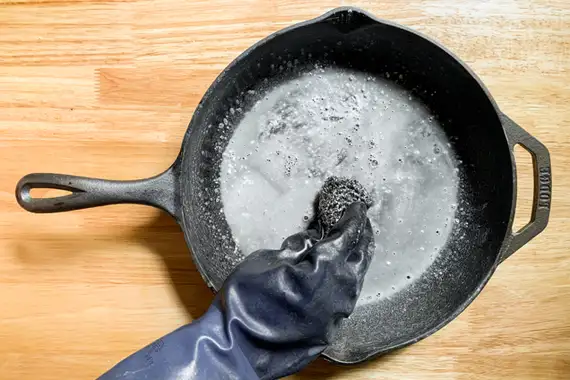
Yes, but only before you season it for the first time. A small amount of mild soap and warm water helps remove factory coatings or old residue. After this initial wash, you generally won’t need soap again — just warm water and a gentle scrub will do.
The key is to dry the skillet completely afterward. Water is cast iron’s worst enemy, so always ensure it’s bone dry before applying oil.
What’s the Best Oil to Use for Seasoning?
Not all oils work the same. The best oils are those with a high smoke point, meaning they can withstand high heat without burning. The top choices include:
- Flaxseed oil – creates a hard, smooth finish.
- Grapeseed oil – affordable and very durable.
- Canola oil – great all-purpose option.
Avoid using butter or olive oil, as they tend to smoke and burn before creating a strong seasoning layer.
How Do I Actually Season My Cast Iron Skillet?
Here’s the simple step-by-step method:
- Clean the skillet with warm water and a bit of soap (only if it’s the first time).
- Dry it completely, first with a towel, then by heating it on low flame for a few minutes.
- Add a small amount of oil — about a teaspoon — and rub it evenly across the inside, outside, and handle.
- Wipe off the excess until it looks almost dry.
- Bake it in the oven upside down at 450°F (230°C) for one hour. Place foil underneath to catch drips.
- Let it cool in the oven before handling.
This process allows the oil to polymerize — meaning it bonds tightly to the metal surface to form that black, shiny, non-stick coating.
How Many Times Should I Season My Skillet?
If your skillet is brand new, it’s best to season it two or three times before using it for cooking. Each round adds a stronger protective layer.
Once it’s seasoned, you don’t have to repeat the full process often. Just maintain it after each use — a light oil rub after washing keeps the surface in great shape.
What Happens If My Cast Iron Gets Rusty?
Rust is common, especially if your skillet was left wet. But don’t worry — it’s easy to fix.
Just scrub the rusty area with steel wool or coarse salt until it’s smooth. Then clean, dry, and re-season the skillet as if it were new. A single round of seasoning usually restores it perfectly.
Can I Use My Cast Iron Skillet Right After Seasoning?
Absolutely! Once your skillet has cooled, it’s ready to go. In fact, cooking with it helps improve the seasoning.
Fry some bacon, sear chicken, or make cornbread — the oils from your food add another layer of natural protection. The more you cook, the better your pan becomes.
Common Myths About Cast Iron Seasoning
Myth 1: You should never use soap on cast iron.
Truth: A tiny bit of soap won’t ruin the seasoning, especially if you reapply oil afterward.
Myth 2: Seasoning lasts forever.
Truth: It fades over time, especially if you wash with harsh detergents or let the pan rust. Light re-seasoning keeps it strong.
Myth 3: All oils work the same.
Truth: High smoke-point oils create harder, smoother finishes than low smoke-point oils.
How Do I Maintain a Seasoned Cast Iron Skillet?
After each use:
- Rinse with warm water and scrub gently.
- Dry immediately with a towel.
- Apply a thin coat of oil while it’s still warm.
- Store in a dry place — not under the sink!
This 1-minute ritual keeps your skillet non-stick, shiny, and rust-free for years.
Final Takeaway
Learning how to season a cast iron skillet isn’t a complicated chore — it’s a kitchen tradition that gives your cookware decades of life.
With a little oil, some heat, and the right care, you’ll create a pan that cooks evenly, cleans easily, and improves with every meal. Whether it’s your grandmother’s old skillet or your first one fresh out of the box, a well-seasoned pan will always deliver perfect flavor and performance.
About the Author
